

Medicare may cover varicose vein treatment when the treatment is medically necessary and the applicable Medicare coverage requirements are met. Treatment performed only to improve appearance is generally not covered.
For Arizona patients with Original Medicare, coverage is also shaped by a local Medicare policy administered by Noridian Healthcare Solutions. The current policy for lower-extremity varicose veins focuses on symptomatic vein disease, documentation of medical necessity, and conservative treatment requirements before certain procedures are covered.
At Elite Vein Clinic, a vein specialist reviews your symptoms, medical history, physical findings, and ultrasound results when clinically appropriate before recommending treatment. Our team can also review insurance coverage and plan requirements. Benefits verification can help estimate coverage, but it does not guarantee that Medicare or another insurance provider will approve or pay a claim.
When Does Medicare Cover Varicose Vein Treatment?
Original Medicare does not cover varicose vein treatment simply because a vein is visible. Coverage depends on whether treatment is considered reasonable and medically necessary for a documented medical problem rather than cosmetic appearance alone.
In Arizona, the current Medicare local coverage policy identifies symptomatic varicose veins as the starting point for covered treatment. Examples of problems that may support medical necessity include pain or burning severe enough to impair mobility, recurrent superficial vein inflammation, a non-healing venous ulcer, bleeding from a varicose vein, stasis dermatitis, or persistent dependent swelling that has not responded to conservative care.
Having one of these symptoms does not automatically mean Medicare will cover treatment. The medical record must support the diagnosis, the treatment must match the clinical findings, and all applicable policy requirements must be met.
What Makes Varicose Vein Treatment Medically Necessary?
Varicose veins can develop when superficial vein valves do not move blood upward efficiently. This backward flow, or venous reflux, can increase pressure inside the affected veins and contribute to chronic venous insufficiency, bulging veins, swelling, aching, burning, skin changes, or other symptoms.
For Medicare purposes, the important distinction is whether the treatment is being used to address symptomatic vein disease. A vein doctor may need to document the symptoms, physical findings, previous conservative treatment, and diagnostic testing that support the treatment plan.
Treatment is less likely to qualify when the concern is appearance alone. That is why medical insurance coverage for symptomatic varicose veins can be very different from coverage for cosmetic surface veins.
What Does Medicare Require for Varicose Vein Treatment in Arizona?
Arizona is part of Medicare Administrative Contractor Noridian’s Jurisdiction F. The current Local Coverage Determination for treatment of varicose veins of the lower extremities, L34209, is effective for services performed on or after May 14, 2026.
For the surgical treatment, sclerotherapy, radiofrequency ablation, and laser treatment addressed by this policy, Noridian requires an adequate trial of conservative treatment before covered intervention. The policy specifies at least three months of conservative management and gives examples such as exercise, periodic leg elevation, weight reduction when appropriate, compression therapy, and avoiding prolonged immobility.
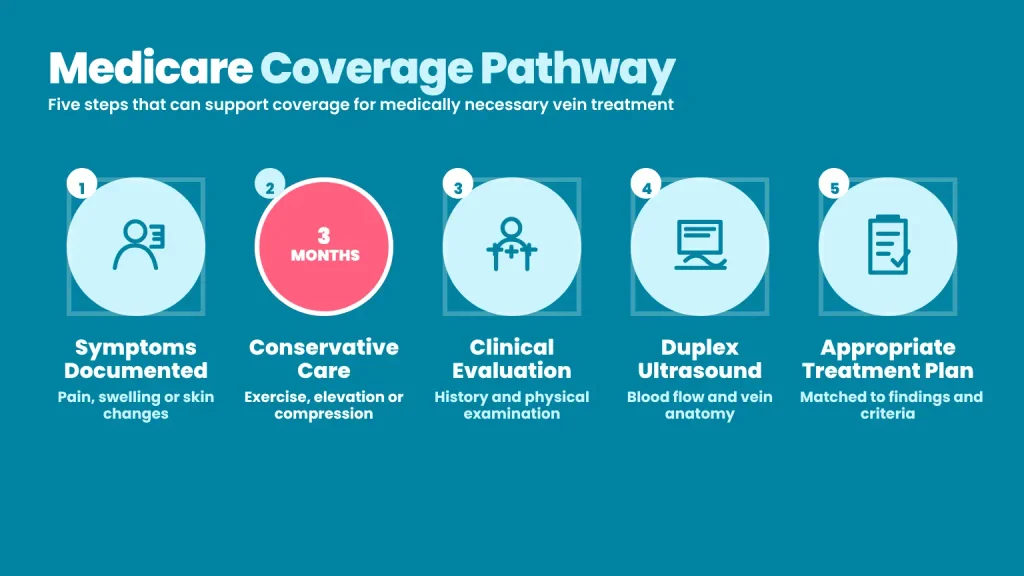
The current Arizona coverage pathway generally involves:
1. Documented symptoms: The record should show symptomatic varicose vein disease rather than an appearance-only concern.
2. Conservative treatment: An adequate trial of conservative care must be documented for the procedures addressed in the policy.
3. Clinical evaluation: The history and physical examination should support the diagnosis and the need for treatment.
4. Vein imaging when appropriate: Doppler or duplex ultrasound can help define venous anatomy and confirm the disease pattern. The current policy includes coverage for one pre-procedure Doppler or duplex study used to map the varicosities.
5. An appropriate treatment plan: The selected procedure must fit the patient’s symptoms, anatomy, and Medicare coverage criteria.
Medicare policies can change, and a Medicare Advantage plan may apply additional plan rules. Coverage should therefore be verified for the specific patient and treatment rather than assumed from a general guideline.
Which Varicose Vein Treatments May Medicare Cover?
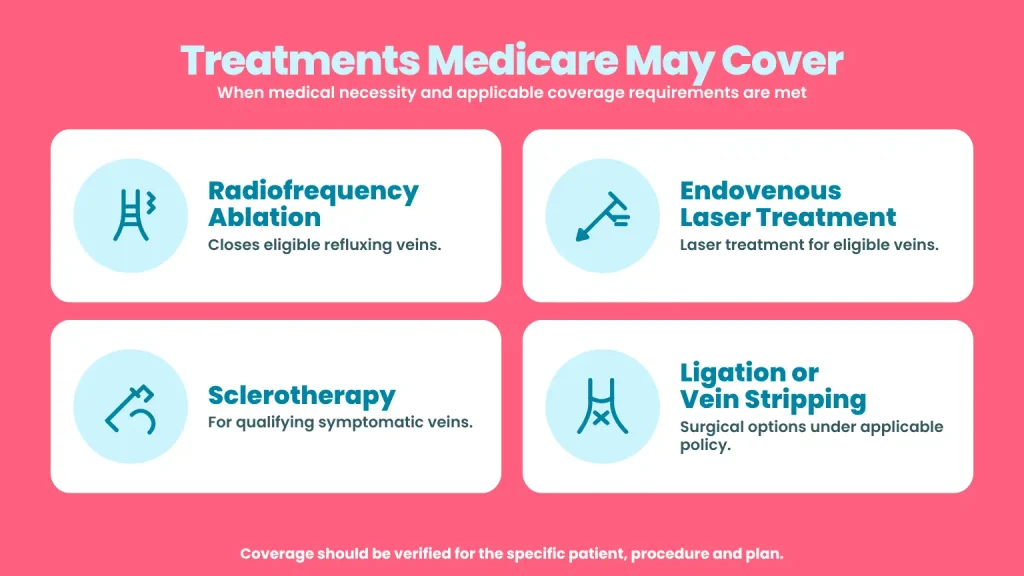
Medicare coverage depends on the type of treatment, the diseased vein, the medical indication, and whether the policy criteria are met. The current Arizona Medicare policy specifically addresses sclerotherapy, surgical ligation or vein stripping, radiofrequency ablation, and endovenous laser treatment for qualifying symptomatic varicose veins.
Radiofrequency Ablation (RFA)
Radiofrequency ablation is a minimally invasive vein treatment that uses controlled radiofrequency energy to close certain refluxing superficial veins. The current Arizona policy includes coverage criteria for endoluminal radiofrequency ablation when symptomatic disease, conservative-treatment requirements, and anatomical criteria are satisfied.
RFA commonly targets a refluxing saphenous vein or another eligible superficial vein rather than small cosmetic spider veins alone.
Sclerotherapy
Sclerotherapy may be used for certain symptomatic varicose veins when the clinical indication and Medicare criteria are met. Coverage is different when sclerotherapy is being performed only for cosmetic spider veins.
Other Minimally Invasive Vein Treatments
Elite Vein Clinic also offers treatment options such as Varithena and VenaSeal. A vein specialist selects the right treatment based on symptoms, ultrasound findings, vein anatomy, medical history, and the goals of care. Medicare coverage for a specific procedure should be checked separately because coverage rules and coding requirements can differ by treatment.
Does Medicare Cover Spider Vein Treatment?
The current Arizona Medicare policy treats superficial telangiectasias, commonly called spider veins, as cosmetic. Treatment of spider veins for appearance alone is therefore not covered under that policy.
This does not mean every person with spider veins has only a cosmetic concern. Some patients also have symptomatic varicose veins or underlying venous insufficiency. If those separate medical problems are present, a vein specialist can evaluate them independently and determine whether medically necessary vein treatment may qualify for Medicare coverage.
Does Medicare Part B Cover Varicose Vein Treatment?
Many medically necessary outpatient physician services and procedures are covered through Medicare Part B when Medicare coverage criteria are satisfied. This can include approved outpatient medical and surgical services.
With Original Medicare, after the Part B deductible is met, a patient generally pays 20% of the Medicare-approved amount for covered doctor or other health care provider services. Additional hospital outpatient copayments or other costs may apply depending on where the service is performed.
Your actual cost can also depend on whether the provider accepts Medicare assignment, the treatment setting, other insurance you carry, and which services are part of the treatment plan.
What About Medicare Advantage Coverage for Varicose Veins?
A Medicare Advantage plan must cover medically necessary services that Original Medicare covers, but the way you receive coverage can be different. Medicare Advantage plans may use provider networks, referrals, prior authorization, and their own copay or coinsurance structure.
Because Medicare Advantage plan rules vary, contact the plan or have the clinic verify benefits before treatment. A service that is potentially covered does not mean every provider, treatment setting, or treatment option will have the same patient cost.
Can Medicare Supplement Insurance Help With the Remaining Cost?
If you have Original Medicare and a Medicare Supplement Insurance policy, also called Medigap, the policy may help pay some of the deductibles, copayments, or coinsurance left by Medicare. The amount depends on the Medigap plan you purchased and the service being covered.
A Medicare supplement does not make a cosmetic treatment medically necessary. The underlying service must first meet Medicare coverage requirements before supplemental coverage becomes relevant.
What Will You Pay if Medicare Covers Your Vein Treatment?
The cost of varicose vein treatment depends on your Medicare coverage, the type of treatment, the provider and facility, and whether you have supplemental insurance. With Original Medicare, Part B cost sharing generally applies to covered outpatient provider services. Medicare Advantage patient responsibility is determined by the individual plan.
If treatment is cosmetic or does not meet Medicare medical-necessity requirements, you may be responsible for the full cost. For a broader explanation of procedure pricing and financial factors, review Elite Vein Clinic’s varicose vein treatment cost resource.
Elite Vein Clinic can review insurance benefits and explain an estimated patient responsibility before treatment when information is available. Final payment still depends on the claim, the Medicare program or Medicare Advantage plan, and the terms of any secondary coverage.
How Can You Find Out Whether Your Vein Treatment Is Covered?
The most reliable way to understand coverage is to connect the insurance question to a real diagnosis and treatment plan. A general answer online cannot determine whether your specific vein treatment is covered.
1. Review Your Symptoms and Medical History: A vein specialist reviews pain, burning, swelling, skin changes, bleeding, ulcers, previous vein care, and other relevant medical information.
2. Complete a Clinical Examination: The provider evaluates visible varicose veins, swelling, skin findings, and other signs of vein disease.
3. Use Duplex Ultrasound When Clinically Appropriate: Ultrasound can evaluate blood flow, venous reflux, and the anatomy of the diseased vein. These findings can help support diagnosis and treatment selection.
4. Document Conservative Treatment When Required: If the applicable Medicare policy requires conservative care, the medical record should document the treatment tried and whether symptoms persisted.
5. Verify Benefits and Select the Treatment: After a diagnosis and treatment recommendation are established, the clinic can review Medicare or Medicare Advantage requirements, expected patient responsibility, and authorization needs when applicable.
Learn more about Elite Vein Clinic’s vein evaluation and ultrasound process before scheduling your appointment.
Frequently Asked Questions About Medicare and Varicose Vein Treatment
1. Does Medicare cover varicose vein treatment?
Medicare may cover varicose vein treatment when the treatment is medically necessary and the applicable coverage criteria are met. Cosmetic treatment is generally not covered. Arizona Original Medicare patients are also subject to Noridian’s local coverage policy for lower-extremity varicose veins.
2. Does Medicare Part B cover varicose vein treatment?
Medically necessary outpatient physician services and procedures may be covered under Medicare Part B when Medicare requirements are met. After the Part B deductible, patients generally pay 20% of the Medicare-approved amount for covered doctor or provider services, although other costs can apply.
3. Does Medicare cover spider vein treatment?
Under the current Arizona Medicare policy, treatment of superficial spider veins or telangiectasias is considered cosmetic and is not covered. A separate symptomatic varicose vein or venous insufficiency problem may be evaluated on its own medical merits.
4. Does Medicare cover sclerotherapy for varicose veins?
Medicare may cover certain sclerotherapy for symptomatic varicose veins when the policy criteria are satisfied. Cosmetic sclerotherapy for spider veins is not covered under the current Arizona policy. Coverage depends on the indication, technique, documentation, and applicable billing rules.
5. Does Medicare require compression stockings before vein treatment?
The current Arizona Medicare policy requires an adequate conservative-treatment trial for the procedures it addresses, and compressive therapy is one of the examples listed. The exact conservative plan should be based on what is clinically appropriate for the individual patient and documented in the medical record.
6. Does Medicare Advantage cover varicose vein treatment?
Medicare Advantage plans must cover medically necessary services that Original Medicare covers, but plan networks, referrals, prior authorization, copays, and coinsurance can differ. Check the specific Medicare Advantage plan before treatment.
Need Help Understanding Your Medicare Vein Coverage? Schedule a vein consultation with Elite Vein Clinic to review your symptoms, evaluation findings, treatment options, and insurance benefits. |