 EN
ENMon – Fri: 8:30 AM – 5:00 PM
NONTHERMAL VARICOSE VEIN TREATMENT
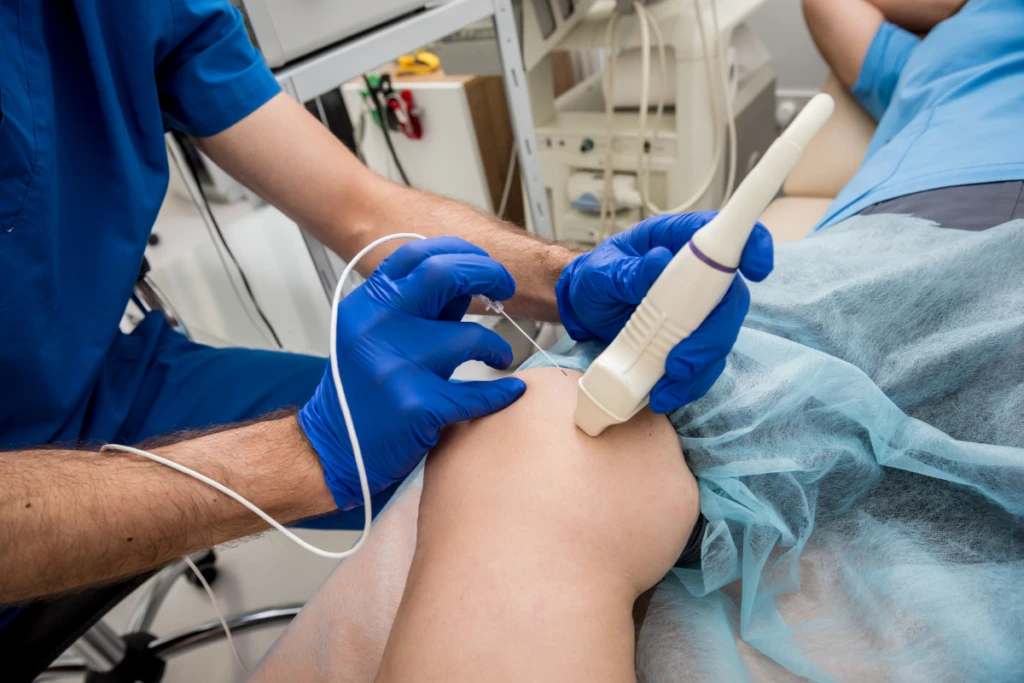
Varithena is a minimally invasive, nonthermal vein treatment that uses prescription polidocanol microfoam to close certain refluxing veins and associated varicose veins. It is administered under ultrasound guidance without heat-based energy, allowing blood to redirect through healthier veins.




QUICK TREATMENT OVERVIEW
Nonthermal prescription microfoam treatment.
Eligible refluxing veins and associated visible varicose veins.
Polidocanol microfoam fills the target vein and causes it to close.
Under 30 minutes.
UNDERSTANDING THE TREATMENT
Varithena is a prescription form of polidocanol injectable microfoam. Polidocanol is a sclerosing medicine, meaning it acts on the inner lining of the treated vein so that the vein closes.
During treatment, a healthcare professional introduces the microfoam into the target vein using a small needle or cannula. Ultrasound helps the provider monitor where the microfoam travels and confirm the response of the treated vein.
Once the affected vein closes, blood naturally redirects through healthier veins. Over time, the body gradually processes the closed vein while pressure within the abnormal superficial vein system is reduced.

WHEN TO CONSIDER A VEIN EVALUATION
Varithena may be considered when symptoms or visible varicose veins are connected to superficial venous reflux.
These symptoms can have several causes. A vein examination and duplex ultrasound are necessary to determine whether venous reflux is present and whether Varithena or another treatment is appropriate.
Venous reflux can contribute to persistent aching, throbbing, or discomfort, particularly after prolonged sitting or standing.
Your legs may feel unusually heavy, tired, or less comfortable as the day progresses.
Poorly functioning superficial veins may allow pressure and fluid to build in the lower legs.
Visible, enlarged, or twisted veins may develop when blood repeatedly flows backward and collects within superficial veins.
Some patients experience itching, burning sensations, nighttime cramps, or restlessness in the legs.
More advanced chronic venous insufficiency may contribute to inflammation, discoloration, or changes around the ankle and lower leg.
PERSONALIZED TREATMENT SELECTION
Varithena is not automatically recommended because a patient has visible varicose veins. Elite Vein Clinic evaluates several factors together before selecting treatment.
Patients should not receive Varithena if they have a known allergy to polidocanol or acute thromboembolic disease. Other medical factors may also affect treatment eligibility and should be discussed during the consultation.
Your provider reviews your leg symptoms, previous vein treatment, medications, mobility, clotting history, allergies, and overall health.
The examination helps identify visible varicose veins, swelling, tenderness, skin changes, and other signs of venous disease.
Duplex ultrasound helps locate venous reflux and evaluate the size, shape, position, and pathway of the affected veins.
Your physician determines whether Varithena, RFA, compounded sclerotherapy, or another approach best fits your anatomy and treatment goals.
HOW VARITHENA WORKS
1
Ultrasound identifies the refluxing vein and helps plan where the microfoam will be administered.
2
The leg and injection site are cleaned and prepared. Local numbing may be used when appropriate.
3
A healthcare professional introduces Varithena into the target vein through a small needle or cannula.
4
Ultrasound and controlled compression help guide the microfoam through the intended vein.
5
Compression is applied, walking is encouraged, and the care team provides aftercare instructions.
ON TREATMENT DAY AND AFTER YOUR PROCEDURE
Varithena is an outpatient treatment that typically takes under 30 minutes. Your care team will explain how to prepare, what you may feel during administration, and the aftercare instructions that apply to your condition.
The care team confirms your treatment plan, reviews medications and medical history, and prepares the affected leg.
You may feel a brief needle sensation, pressure, or mild discomfort at the injection site. Experiences differ.
Compression is applied after treatment, and walking is encouraged before you leave.
Temporary tenderness, bruising, discomfort, swelling, or changes around the injection site may occur.
Your provider will explain when to resume work, exercise, heavy lifting, travel, and prolonged standing.
Visible veins and vein-related symptoms may improve gradually. Follow-up helps determine whether additional care is appropriate.
CHOOSING THE RIGHT VEIN TREATMENT
Your physician selects treatment based on your symptoms, vein anatomy, ultrasound findings, medical history, and the type of veins involved.
| Comparison | Varithena® | RFA / ClosureFast™ | VenaSeal™ | Compounded Sclerotherapy |
|---|---|---|---|---|
| Treatment type | Nonthermal prescription microfoam | Thermal, catheter-based treatment | Nonthermal, catheter-based adhesive closure | Clinic-prepared liquid or foam injection |
| How it works | Polidocanol microfoam fills and closes the target vein | Controlled radiofrequency energy heats and closes the vein wall | Medical adhesive permanently closes an eligible refluxing vein | A sclerosant irritates the target vein so it closes |
| Possible role | Eligible refluxing veins and associated varicosities | Certain refluxing superficial truncal veins | Eligible symptomatic superficial truncal veins | Spider veins and small varicose veins at EVC |
| Guidance | Administered and monitored with ultrasound | Catheter positioned under ultrasound guidance | Ultrasound-guided catheter placement | May be visual or ultrasound-guided depending on the vein |
| Why it may be selected | Nonthermal option that may accommodate challenging vein anatomy | Vein anatomy supports catheter placement and thermal treatment | A nonthermal option that avoids heat and multiple tumescent injections | Smaller or more superficial veins need injection treatment |
INSURANCE & BENEFITS
Insurance coverage depends on your individual plan, diagnosis, documented symptoms, ultrasound findings, and medical-necessity requirements. Verification of benefits does not guarantee that an insurer will approve or pay a claim. Deductibles, copays, coinsurance, prior authorization, or conservative-treatment requirements may apply.
We review your symptoms, medical history, and previous vein care.
Ultrasound helps document reflux and identify the veins involved.
The team checks available coverage and whether authorization or supporting documentation may be required.
You receive an explanation of the approval process and any estimated patient responsibility before treatment is scheduled.
WHY CHOOSE ELITE VEIN CLINIC?
Your symptoms, medical history, vein anatomy, and ultrasound findings help determine whether Varithena is appropriate.
Elite Vein Clinic offers several treatment options, allowing the care team to recommend Varithena only when it fits the diagnosis and vein anatomy.
Varithena closes eligible veins without heat-based energy or surgical vein removal.
You receive instructions based on the veins treated, your medical history, and the complete treatment plan.
YOUR VEIN CARE TEAM
Learn about the physicians and the Phoenix Valley locations they currently serve.

Board-Certified Internal Medicine
10+ Years of Clinical Experience
Locations served:
Avondale
Chandler
Gilbert
Mesa
Peoria
Phoenix
Scottsdale
Tempe

University of Miami Training
Minimally invasive vein care
Locations served:
Surprise
Ahwatukee Foothills
Cave Creek
Vein care you can trust
Phoenix Valley locations
Schedule a vein evaluation at a convenient Phoenix Valley location. Our team will help coordinate your consultation based on your treatment needs and preferred clinic.
COMMON QUESTIONS ABOUT VARITHENA
English English English  Spanish English English English Spanish