

Vein Treatments
- Treatment is quick
- Minimally invasive
- Covered by most insurance plans
Radiofrequency Ablation (ClosureFast TM)
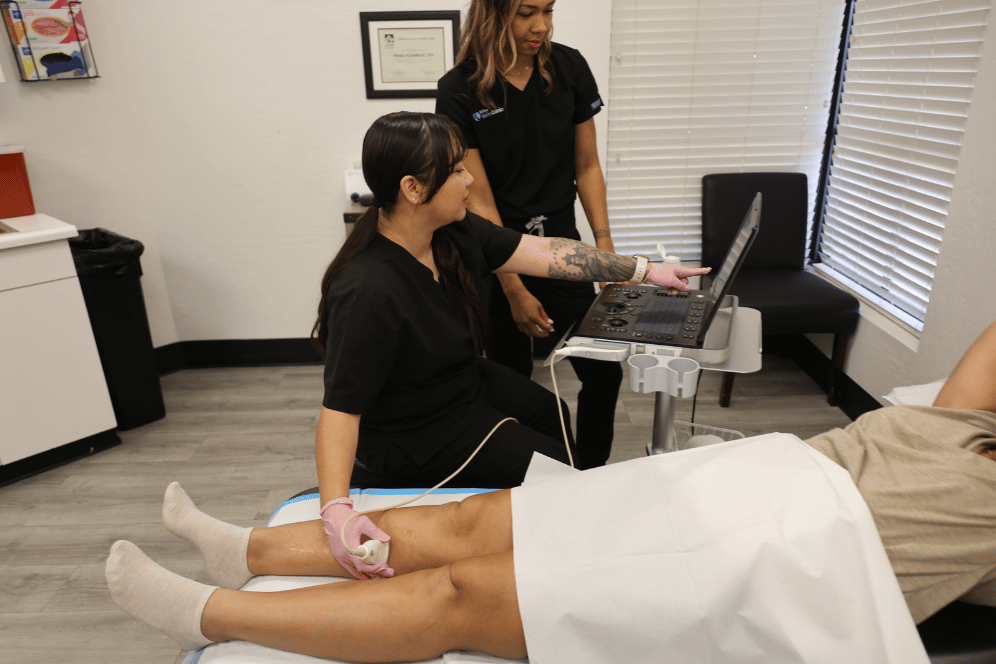
Radiofrequency ablation is a treatment device that is placed into a diseased vein under ultrasound guidance through a small opening in the skin. The small device delivers heat to the vein wall, causing it to shrink and seal closed.
Once the diseased vein is closed, blood will reroute itself to other healthy veins. The great thing about radiofrequency ablation is that its minimally invasive outpatient procedure that gets you back to normal the very same day.
Venous reflux disease – which leads to:
- Leg or ankle swelling
- Leg pain and aching
- Leg cramps
- Restless leg
- Leg heaviness or fatigue
- Burning or itching skin
- Skin changes or rash
Venous reflux disease is a progressive medical condition that if left untreated, will likely worsen over time and develop into a more serious form of venous disease called chronic venous insufficiency (CVI). CVI leads to more serious outcomes such as poor healing wounds, permanent skin damage, and an increased risk of deep blood clot.
- The procedure takes about 20-40 minutes.
- The procedure is almost always a permanent fix for the diseased veins being treated.
- The number of treatments needed depends on the severity and number of veins that are diseased.
- Patients get relief/improvement of symptoms after 2 days
- This is a permanent fix to diseased refluxing veins in the legs
- Proven long term results with positive patient outcomes and experience
- Rapid recovery with patients resuming normal activities within a few days
What Does It Treat?
Venous reflux disease – which leads to:
- Leg or ankle swelling
- Leg pain and aching
- Leg cramps
- Restless leg
- Leg heaviness or fatigue
- Burning or itching skin
- Skin changes or rash
Venous reflux disease is a progressive medical condition that if left untreated, will likely worsen over time and develop into a more serious form of venous disease called chronic venous insufficiency (CVI). CVI leads to more serious outcomes such as poor healing wounds, permanent skin damage, and an increased risk of deep blood clot.
How Long Does It Take?
- The procedure takes about 20-40 minutes.
- The procedure is almost always a permanent fix for the diseased veins being treated.
- The number of treatments needed depends on the severity and number of veins that are diseased.
Benefits
- Patients get relief/improvement of symptoms after 2 days
- This is a permanent fix to diseased refluxing veins in the legs
- Proven long term results with positive patient outcomes and experience
- Rapid recovery with patients resuming normal activities within a few days
Varithena Ablation
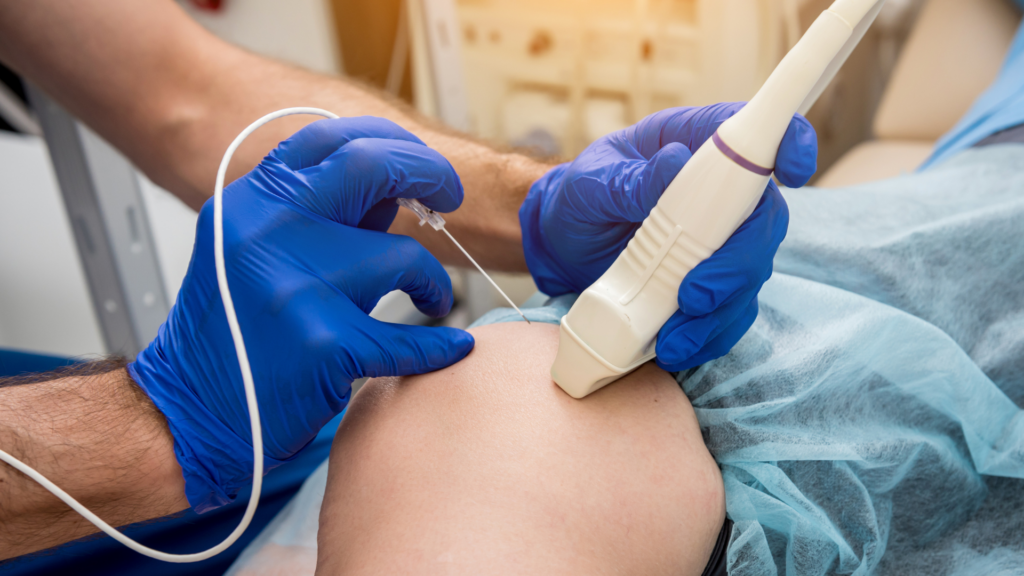
Varithena ablation is a quick, minimally invasive treatment for varicose veins.
A foam medication is injected into the vein, causing it to close and redirect blood to healthier veins.
It helps reduce pain, swelling, and the appearance of varicose veins, with little downtime needed.
Varithena is used to treat venous reflux disease, which can cause:
- Leg or ankle swelling
- Leg pain and aching
- Leg cramps
- Restless leg
- Leg heaviness or fatigue
- Burning or itching skin
- Skin changes or rash
Venous reflux disease is progressive and, if left untreated, may develop into chronic venous insufficiency (CVI), a more severe condition that can lead to skin ulcers, permanent skin damage, and an increased risk of deep vein thrombosis (DVT).
- The procedure typically takes 30 minutes or less.
- Most patients experience symptom relief within a few days.
- Minimally invasive – No incisions or heat-based energy required
- Quick symptom relief – Many patients notice improvement within a few days
- Effective for multiple vein types – Treats large, tortuous, and previously untreated veins
- Rapid recovery – Patients can resume normal activities within a day or two
- Proven long-term results – Clinically tested with high success rates
What Does It Treat?
Varithena is used to treat venous reflux disease, which can cause:
- Leg or ankle swelling
- Leg pain and aching
- Leg cramps
- Restless leg
- Leg heaviness or fatigue
- Burning or itching skin
- Skin changes or rash
Venous reflux disease is progressive and, if left untreated, may develop into chronic venous insufficiency (CVI), a more severe condition that can lead to skin ulcers, permanent skin damage, and an increased risk of deep vein thrombosis (DVT).
How Long Does It Take?
- The procedure typically takes 30 minutes or less.
- Most patients experience symptom relief within a few days.
Benefits
- Minimally invasive – No incisions or heat-based energy required
- Quick symptom relief – Many patients notice improvement within a few days
- Effective for multiple vein types – Treats large, tortuous, and previously untreated veins
- Rapid recovery – Patients can resume normal activities within a day or two
- Proven long-term results – Clinically tested with high success rates
Compounded Sclerotherapy
Compounded Sclerotherapy is a generic injectable foam that is administered to varicose veins with or without ultrasound guidance. This is often the treatment of choice for small varicose veins and spider veins.
Sclerotherapy causes the vein to scar down and forces blood to reroute to healthier veins. The collapsed vein is reabsorbed into the local tissue and eventually fades away.
Sclerotherapy is often used at the end of a treatment plan for venous reflux disease.
- The procedure takes about 20-40 minutes in most cases.
- The procedure is good at closing down small varicose veins and spider veins.
- Most people will need 1-2 treatments with compounded sclerotherapy depending on the severity and number of their varicose veins.
- Resolution of the varicose veins treated.
- Proven track record with years of solid research behind it
- Improvement/resolution of unwanted pain, aching, pressure, swelling, and other associated symptoms.
- Improved cosmetic appearance of varicose and spider veins.
What Does It Treat?
How Long Does It Take?
- The procedure takes about 20-40 minutes in most cases.
- The procedure is good at closing down small varicose veins and spider veins.
- Most people will need 1-2 treatments with compounded sclerotherapy depending on the severity and number of their varicose veins.
Benefits
- Resolution of the varicose veins treated.
- Proven track record with years of solid research behind it
- Improvement/resolution of unwanted pain, aching, pressure, swelling, and other associated symptoms.
- Improved cosmetic appearance of varicose and spider veins.
VenaSeal™ Closure System
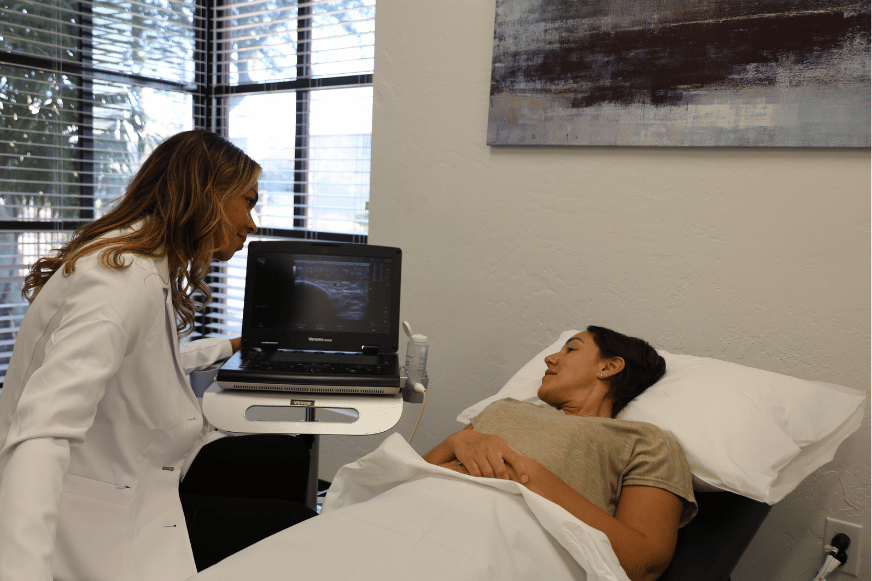
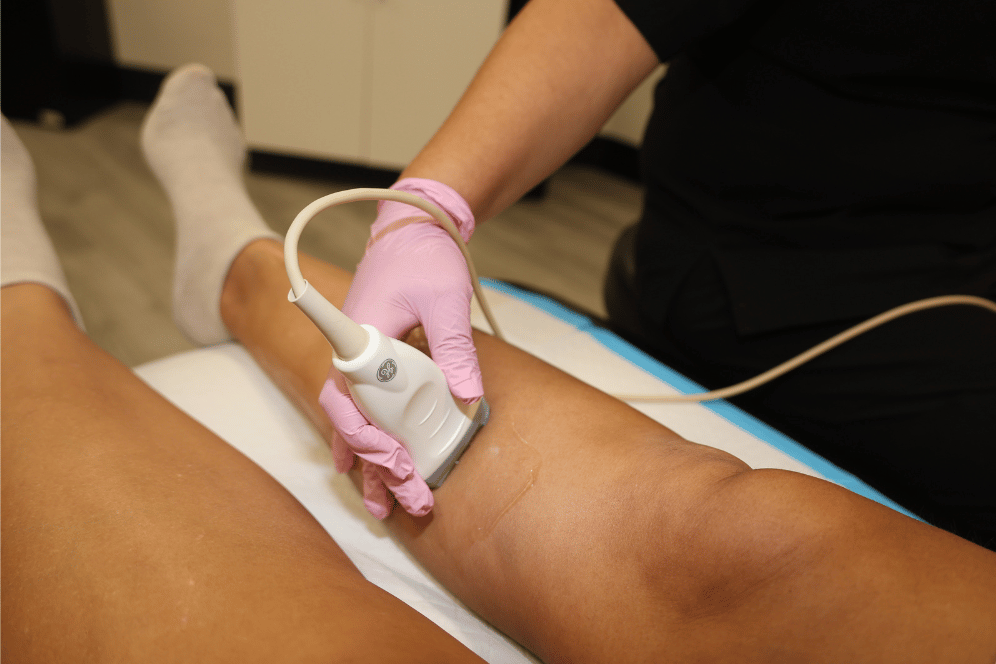
VenaSeal™ is a minimally invasive treatment for venous reflux disease that uses a specially formulated medical adhesive to close a diseased vein. Under ultrasound guidance, a thin catheter is inserted through a small access point, and a small amount of adhesive is delivered along the vein. Once the vein is sealed, blood naturally reroutes to nearby healthy veins, helping improve circulation and relieve symptoms.
Unlike thermal treatments, VenaSeal™ does not use heat to close the vein and does not require multiple injections of numbing medication along the length of the treated vein. Most patients can return to their normal daily activities shortly after treatment.
VenaSeal™ is used to treat symptomatic venous reflux in superficial veins of the legs. Venous reflux can contribute to:
Most VenaSeal™ procedures take approximately 30–60 minutes, although the exact treatment time depends on the number, length, and location of the veins being treated. It is performed as an outpatient procedure, and most patients can leave the office shortly afterward.
- Minimally invasive outpatient treatment
- Does not use heat to close the vein
- Requires only a small access point
- Does not require multiple numbing injections along the vein
- Minimal discomfort and bruising for many patients
- Little to no downtime
- Rapid return to normal daily activities
- Compression stockings may not be required after treatment, depending on your provider’s recommendation
- Long-lasting closure of the treated vein
What Does It Treat?
VenaSeal™ is used to treat symptomatic venous reflux in superficial veins of the legs. Venous reflux can contribute to:
How Long Does It Take?
Benefits
- Minimally invasive outpatient treatment
- Does not use heat to close the vein
- Requires only a small access point
- Does not require multiple numbing injections along the vein
- Minimal discomfort and bruising for many patients
- Little to no downtime
- Rapid return to normal daily activities
- Compression stockings may not be required after treatment, depending on your provider’s recommendation
- Long-lasting closure of the treated vein
Why Start Vein Treatment Now?
- Untreated vein disease can lead to serious complications like ulcers or blood clots.
- Early treatment not only alleviates discomfort but also prevents further issues.
- Most patients notice a significant improvement within a week!