 EN
ENMon – Fri: 8:30 AM – 5:00 PM
NONTHERMAL MEDICAL ADHESIVE VEIN TREATMENT
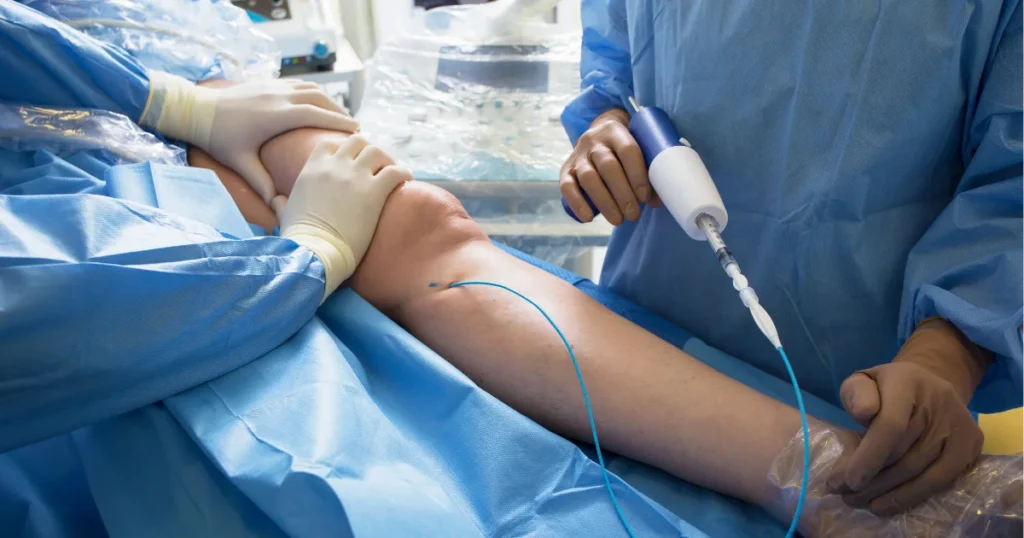
VenaSeal™ is a minimally invasive, catheter-based treatment for adults with clinically symptomatic venous reflux in eligible lower-extremity superficial truncal veins. A specially formulated medical adhesive is delivered inside the diseased vein under ultrasound guidance to close the vein and redirect blood through functioning veins.




QUICK TREATMENT OVERVIEW
Minimally invasive, nonthermal, catheter-delivered medical adhesive closure.
Eligible lower-extremity superficial truncal veins with symptomatic venous reflux.
A specially formulated adhesive closes the diseased vein so blood reroutes through functioning veins.
Approximately 30-60 minutes, depending on the number, length, and location of veins being treated.
UNDERSTANDING THE TREATMENT
VenaSeal is a nonthermal, nontumescent endovenous treatment that closes an eligible refluxing superficial truncal vein with a specially formulated cyanoacrylate medical adhesive. The treatment is performed through a small catheter placed under ultrasound guidance.
As the adhesive is delivered, the vein walls are brought together with gentle external pressure. The treated vein closes, and blood naturally reroutes through healthier functioning veins. The procedure is performed in the office and does not require surgical vein stripping.

The VenaSeal system received FDA approval in 2015. In the VeClose extension study, the treated-vein closure rate remained 94.6% at five years. Current U.S. venous guidelines support either thermal or nonthermal ablation for appropriate symptomatic axial reflux, depending on anatomy, physician expertise, and patient preference. Individual results vary.
NONTHERMAL, NONTUMESCENT VEIN CLOSURE
VenaSeal uses a specially formulated cyanoacrylate medical adhesive rather than thermal energy or a sclerosant foam.
The treated vein is closed without radiofrequency or laser heat, so the procedure does not depend on thermal ablation.
Local numbing is used at the access site, but VenaSeal does not require multiple tumescent-anesthetic injections along the vein.
Routine post-procedure compression is often not required with VenaSeal, although the treating clinician may recommend it for an individual patient.
PERSONALIZED TREATMENT SELECTION
Elite Vein Clinic considers VenaSeal only after reviewing symptoms, medical history, vein anatomy, and duplex ultrasound findings. The goal is to match the treatment to the reflux pattern rather than select a procedure based only on the appearance of visible varicose veins.
The provider reviews aching, heaviness, swelling, visible varicose veins, skin changes, previous treatment, and the patient’s treatment goals.
Ultrasound confirms reflux, maps the target superficial vein, evaluates vein anatomy, and helps rule out findings that may change the treatment plan.
The clinician considers vein size, course, reflux location, one- or two-leg involvement, and whether surface tributaries will need separate treatment.
The provider reviews cyanoacrylate hypersensitivity, thrombophlebitis, clotting history, infection risk, medications, and other factors before recommending VenaSeal.
HOW VENASEAL WORKS
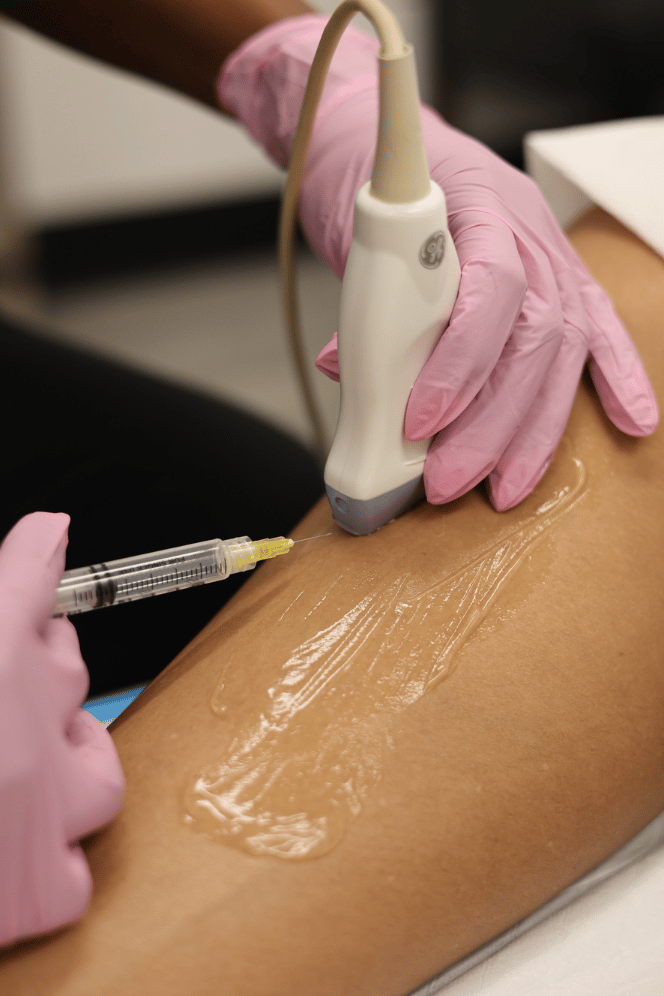
VenaSeal is an outpatient procedure performed under ultrasound guidance. A typical treatment includes the following steps.
1
The clinician reviews duplex ultrasound findings, prepares the treatment area, and numbs the small access site.
2
A thin catheter is inserted into the diseased superficial vein and positioned under ultrasound guidance.
3
Small, controlled amounts of VenaSeal medical adhesive are delivered at specific points in the target vein.
4
Gentle pressure is applied over the vein so the walls come together as the adhesive seals the treated segment.
5
The catheter is removed and a small bandage is placed over the access site. Follow-up instructions are reviewed before you leave.
ON TREATMENT DAY AND AFTER YOUR PROCEDURE
A typical VenaSeal appointment takes approximately 30-60 minutes, although the exact time depends on the number, length, and location of the veins being treated. The procedure is outpatient and uses ultrasound guidance throughout catheter placement and adhesive delivery.
The care team confirms your symptoms, health information, ultrasound findings, treatment side, and any final questions.
The leg is positioned and cleaned. Local numbing is applied at the small access point before catheter placement.
The clinician advances the catheter, delivers small amounts of adhesive, and applies pressure along the treated segment.
VenaSeal is an outpatient treatment. After the access site is dressed and instructions are reviewed, you can usually leave shortly afterward.
Temporary tenderness, bruising, redness, or irritation may occur around the access site or treated vein.
Many patients return to normal daily activities quickly. Follow EVC instructions for exercise, prolonged inactivity, travel, and other restrictions.
Routine compression may not be necessary after VenaSeal, but the provider may recommend stockings or bandaging based on your treatment plan.
Your care team will explain follow-up timing and whether residual varicose or spider veins need Varithena, sclerotherapy, phlebectomy, or another treatment.
RESULTS AND REALISTIC EXPECTATIONS
The target refluxing vein is closed during the procedure, but symptom relief and visible changes do not follow one fixed timeline. Some patients notice improvement in aching, heaviness, swelling, or other reflux-related symptoms relatively quickly, while visible varicose veins may change more gradually.
VenaSeal treats the selected refluxing truncal vein; it does not directly remove every surface varicosity. Additional treatment may be recommended for residual bulging or spider veins. Successfully closing one diseased vein also does not prevent new reflux or new varicose veins from developing elsewhere over time.
SAFETY, CONTRAINDICATIONS & SIDE EFFECTS
VenaSeal is a well-studied minimally invasive treatment, but all medical procedures have potential side effects and risks. The treating clinician reviews allergy history, clotting risk, current medical conditions, and device-specific contraindications before treatment.
Access-site tenderness or bruising, localized pain, redness, inflammation or phlebitis, swelling, and temporary skin or tissue irritation can occur.
Hypersensitivity or allergic reaction to cyanoacrylate, infection, bleeding, deep vein thrombosis, pulmonary embolism, embolization, vascular injury, or other device-related complications are possible.
VenaSeal is contraindicated in patients with previous hypersensitivity to the VenaSeal adhesive or cyanoacrylates, acute superficial thrombophlebitis, thrombophlebitis migrans, or acute sepsis. Tell the provider about prior reactions to cyanoacrylate or medical adhesives, previous blood clots, infections, medications, and significant medical conditions.
CHOOSING THE RIGHT VEIN TREATMENT
Treatment selection depends on the refluxing vein, symptoms, ultrasound findings, medical history, and patient preference.
| Comparison | VenaSeal | Varithena | Sclerotherapy | RFA / ClosureFast |
|---|---|---|---|---|
| Treatment type | Nonthermal catheter-delivered medical adhesive | Standardized prescription polidocanol microfoam | Customized liquid or foam injection | Thermal catheter-based radiofrequency treatment |
| How it works | Medical adhesive permanently closes the refluxing target vein | Microfoam fills and closes eligible refluxing veins and varicosities | A sclerosant closes the target vein | Radiofrequency energy heats and closes the vein wall |
| Possible role | Eligible symptomatic superficial truncal reflux, such as an appropriate saphenous vein | Eligible varicose veins, including refluxing GSV-system veins and associated varicosities | Spider veins, reticular veins, and small varicose veins | Certain refluxing superficial truncal veins that support catheter-based thermal treatment |
| Guidance / aftercare | Ultrasound-guided; no tumescent anesthesia; compression often not routinely required | Administered and monitored according to the treatment plan; compression is required after treatment per prescribing information | Visual or ultrasound-guided depending on the target vein | Ultrasound-guided with tumescent anesthesia; post-treatment compression is commonly required |
| Why it may be selected | A nonthermal option that avoids heat and multiple tumescent injections when anatomy and history fit | A nonthermal microfoam option that can treat refluxing and tortuous varicose-vein patterns | Best suited to smaller or more superficial target veins | An established thermal option with long-term evidence when the vein anatomy supports RFA |
COST, INSURANCE & BENEFITS
VenaSeal cost varies according to the number and length of veins being treated, whether one or both legs are involved, whether additional treatment is needed for surface varicosities, and the requirements of the patient’s insurance plan.
Many insurance plans may cover VenaSeal when treatment is medically necessary for symptomatic venous reflux and plan-specific documentation or authorization requirements are met. Coverage varies, and benefits verification does not guarantee payment.
The team reviews your symptoms, previous vein care, medical history, and treatment goals.
The provider documents symptomatic reflux and maps the target veins when medical coverage may apply.
The clinic checks available plan criteria, authorization requirements, and expected patient responsibility when appropriate.
You receive the recommended treatment sequence, appointment options, and next steps after the clinical and benefits review.
WHY CHOOSE ELITE VEIN CLINIC?
The team considers symptoms, examination findings, medical history, and the full reflux pattern before recommending VenaSeal.
Treatment selection and catheter placement are based on ultrasound-defined anatomy rather than visible veins alone.
EVC can match VenaSeal, RFA, Varithena, sclerotherapy, or another treatment to the vein pattern and treatment goals.
The care team combines established clinical evidence with individualized findings to set realistic expectations about recovery, residual veins, and possible risks.
YOUR VEIN CARE TEAM
Learn about the physicians and the Phoenix Valley locations they currently serve.

Board-Certified Internal Medicine
10+ Years of Clinical Experience
Locations served:
Avondale
Chandler
Gilbert
Mesa
Peoria
Phoenix
Scottsdale
Tempe

University of Miami Training
Minimally invasive vein care
Locations served:
Surprise
Ahwatukee Foothills
Cave Creek
Vein care you can trust
Phoenix Valley locations
Schedule a vein evaluation at a convenient Phoenix Valley location. Our team will help coordinate your consultation based on your treatment needs and preferred clinic.
COMMON QUESTIONS ABOUT VENASEAL
English English English  Spanish English English English Spanish