


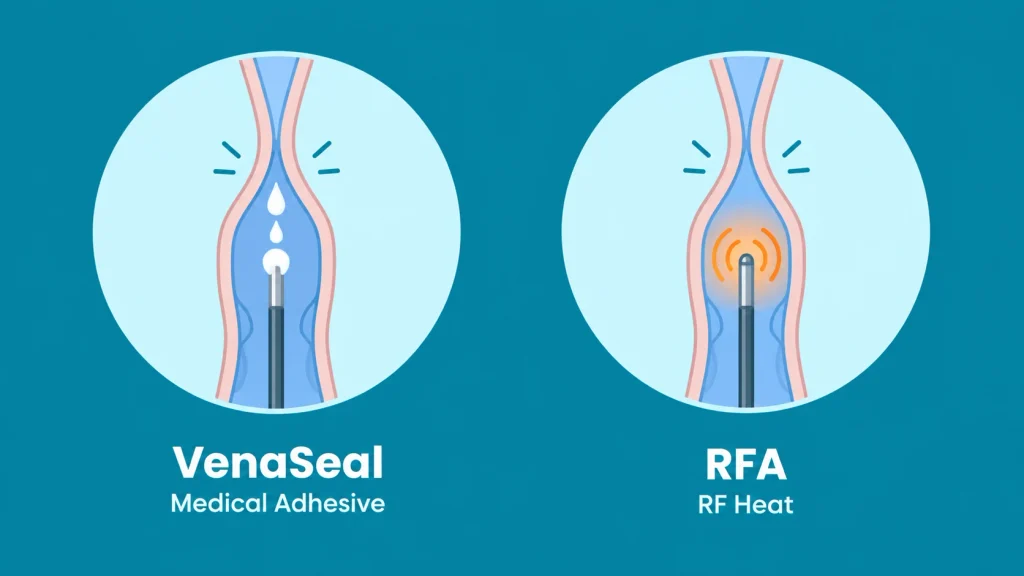
VenaSeal and radiofrequency ablation (RFA) are both minimally invasive, ultrasound-guided treatments used to close eligible refluxing superficial veins. The main difference is how they close the vein: VenaSeal uses a medical adhesive without heat, while RFA uses controlled radiofrequency heat.
Neither treatment is universally better. Current U.S. vascular guidelines support both thermal and nonthermal ablation for appropriately selected patients. The right option depends on the reflux pattern, vein anatomy, ultrasound findings, medical history, previous treatment, and individual preferences.
Elite Vein Clinic offers both VenaSeal and RFA. A duplex ultrasound and clinical evaluation help determine which treatment fits the vein being treated rather than selecting a procedure based on one feature alone.
What Is VenaSeal?
VenaSeal is a nonthermal, catheter-based treatment that delivers small amounts of medical cyanoacrylate adhesive inside an eligible refluxing superficial truncal vein. Gentle external pressure helps the vein walls come together as the adhesive seals the treated segment. Blood then reroutes through functioning veins.
Because VenaSeal does not rely on heat, it does not require tumescent anesthesia along the length of the treated vein. Local numbing may still be used at the catheter access site.
What Is Radiofrequency Ablation (RFA)?
Radiofrequency ablation is a thermal catheter treatment. After the target vein is mapped with ultrasound, the treatment area is numbed and a small catheter is positioned inside the affected vein. Controlled radiofrequency energy heats sections of the vein wall as the catheter is withdrawn, causing the vein to close.
RFA uses tumescent anesthesia around the treated vein. This numbing fluid helps control discomfort and separates the vein from surrounding tissue during thermal treatment.
VenaSeal vs. RFA: What Is the Main Difference?
Both procedures aim to close an abnormal refluxing superficial vein, but the treatment experience and technology are different.
| Factor | VenaSeal | Radiofrequency Ablation (RFA) |
| How the vein closes | Medical adhesive seals the target vein | Controlled radiofrequency heat closes the vein wall |
| Thermal or nonthermal | Nonthermal | Thermal |
| Catheter-based | Yes, under ultrasound guidance | Yes, under ultrasound guidance |
| Tumescent anesthesia | Not required along the vein | Required around the treated segment |
| Compression after treatment | Often not routinely required; individualized instructions may differ | More commonly recommended after thermal ablation; follow the clinic-specific plan |
| Return to routine activity | Usually rapid for appropriately treated patients | Usually rapid for appropriately treated patients |
| Unique consideration | Cyanoacrylate adhesive sensitivity or allergy | Thermal treatment and nearby nerve/skin considerations |
| Long-term evidence | Durable closure with long-term comparative data | Durable closure with long-term comparative data |
How Effective Are VenaSeal and RFA?
Both treatments have strong evidence for closing appropriately selected refluxing saphenous veins. In the randomized VeClose study, cyanoacrylate closure remained noninferior to RFA through five years of follow-up, and both groups maintained improvements in symptoms and quality of life.
That evidence is one reason the comparison should not be framed as a simple winner-versus-loser decision. Current vascular guidelines recommend either thermal or nonthermal ablation for many patients with symptomatic axial reflux, depending on anatomy, physician expertise, and patient preference.
Which Treatment Requires More Numbing Injections?
RFA generally requires more numbing along the treatment path because tumescent anesthesia is placed around the vein before radiofrequency heat is delivered. VenaSeal avoids tumescent anesthesia along the vein because the adhesive closes the vessel without thermal energy.
This does not mean VenaSeal is completely injection-free. Local anesthetic may still be used where the small catheter enters the skin. The number of injections and the overall treatment experience can also vary with the length and number of veins being treated.
Will You Need Compression Stockings After VenaSeal or RFA?
Routine compression is often not necessary after VenaSeal, although a vein specialist may still recommend stockings or other compression based on the complete treatment plan. Compression is more commonly recommended after thermal ablation such as RFA, and current vascular guidance supports short-term compression after thermal treatment for pain reduction.
Follow the aftercare instructions provided for your specific procedure. If additional surface-vein treatment is performed at the same time or later, the compression plan may differ.
How Does Recovery Compare?
Both VenaSeal and RFA are outpatient procedures designed for a relatively fast return to routine activity. Many patients walk shortly after treatment and resume normal daily activities quickly, although exercise, lifting, travel, and other restrictions should follow the instructions given by the treating clinician.
VenaSeal can reduce some treatment-related steps because it avoids heat and multiple tumescent-anesthetic injections. RFA also has a short recovery for many patients. Additional procedures, the number of treated veins, and individual healing can affect what recovery feels like.
How Does Vein Anatomy Affect the Choice Between VenaSeal and RFA?
Vein anatomy can matter more than a simple preference for adhesive or heat. Duplex ultrasound helps define the size, course, depth, length, and location of reflux before a treatment plan is selected.
For some large nonaneurysmal saphenous veins, current vascular guidance favors thermal treatment such as RFA. In selected distal or very superficial segments, a nonthermal approach may help avoid certain heat-related nerve or skin concerns. These are clinical considerations, not rigid rules, and the entire reflux pattern must be reviewed.
Elite Vein Clinic uses an ultrasound-based vein evaluation to determine which target veins need treatment and whether residual surface veins may require a separate procedure.
What Are the Risks of VenaSeal vs. RFA?
Both procedures are minimally invasive, but each has treatment-specific considerations. VenaSeal can cause localized inflammation or phlebitis and carries a specific risk of hypersensitivity or allergic reaction to cyanoacrylate adhesive. It is not appropriate for patients with certain known adhesive sensitivities or other contraindications.
RFA uses heat, so thermal injury to nearby tissue or nerve irritation is a treatment-specific consideration. Bruising, tenderness, inflammation, clotting complications, infection, and other adverse effects can occur with endovenous procedures. A clinician should review individual risks before treatment.
Does VenaSeal or RFA Cost More?
There is no single price advantage that applies to every patient. The cost of either treatment depends on the number and length of veins treated, whether one or both legs need care, the treatment sequence, insurance benefits, deductible or coinsurance, and whether additional vein procedures are recommended.
Elite Vein Clinic can provide a personalized estimate after the clinical treatment plan and available insurance benefits are reviewed. Price alone should not determine which procedure is medically appropriate.
Is VenaSeal or RFA Covered by Insurance?
Either treatment may be covered when it is medically necessary and the insurance plan requirements are met. Coverage can depend on documented symptoms, duplex ultrasound findings, conservative-care requirements, network status, prior authorization, and the procedure allowed by the plan. Elite Vein Clinic can review available insurance coverage and benefits before treatment, although verification does not guarantee payment.
How Do We Decide Which Treatment Is Right for You?
Elite Vein Clinic does not choose VenaSeal or RFA based on one feature alone. The recommendation is built from the complete clinical picture.
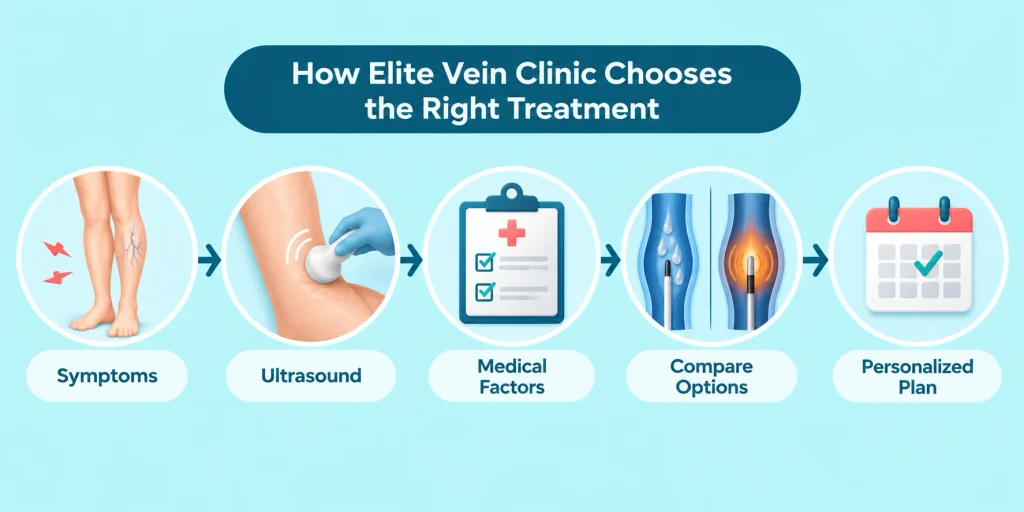
1. Review Your Symptoms: The clinician reviews heaviness, aching, swelling, visible varicose veins, skin changes, previous treatment, and treatment goals.
2. Map the Veins: Duplex ultrasound identifies reflux, the affected superficial vein, vein size, depth, course, and treatment length.
3. Review Medical Factors: The team considers adhesive sensitivity, clotting history, infection risk, medications, prior procedures, and other health factors.
4. Compare the Treatment Options: The clinician weighs the advantages and limitations of nonthermal adhesive closure and thermal RFA for the specific anatomy.
5. Build a Personalized Plan: Elite Vein Clinic explains the recommended procedure, aftercare, insurance considerations, and whether additional surface-vein treatment may be needed.
| Not Sure Whether VenaSeal or RFA Fits Your Veins? Schedule a Vein Evaluation |
Frequently Asked Questions About VenaSeal vs. RFA
Not for every patient. Both are effective, guideline-supported treatments for appropriate refluxing superficial veins. The better fit depends on vein anatomy, ultrasound findings, medical history, adhesive sensitivity, preferences, and the overall treatment plan.
Both have durable long-term evidence. Five-year comparative research found cyanoacrylate closure remained noninferior to RFA. Long-term success also depends on the treated vein, disease pattern, and development of reflux in other veins over time.
VenaSeal avoids heat and tumescent anesthesia along the vein, so it usually involves fewer anesthetic injections. However, comparative research has found mild procedural discomfort with both treatments, and individual experience varies.
Routine compression is often not required after VenaSeal, but your clinician may recommend it based on your treatment plan or any additional procedures.
Yes. RFA uses tumescent anesthesia around the treated vein to numb the area and protect surrounding tissue while radiofrequency heat is applied.
Yes. Hypersensitivity to the cyanoacrylate adhesive is a VenaSeal-specific consideration. Your clinician should review any history of reactions to medical adhesives or cyanoacrylates before recommending treatment.
The decision is based on symptoms, duplex ultrasound findings, vein size and anatomy, treatment length, medical history, prior treatment, insurance requirements, and patient preferences. Neither procedure should be selected from visible veins alone.