
Thermal Closure
Is Radiofrequency Ablation Covered?
RFA may be covered when it is medically necessary and the patient's plan requirements are met.
Learn About RFA
 EN
Insurance Coverage for Vein Care
Many insurance plans may cover varicose vein treatment when a diagnosed vein condition is medically necessary and the plan's coverage requirements are met. Elite Vein Clinic can verify your benefits and help you understand the next insurance steps before treatment.
✓
Free insurance benefits verification
✓
Aetna, Cigna, Medicare & More
✓
Plan-Specific Guidance

The First Coverage Question
Insurance is generally more likely to support treatment when it addresses a diagnosed vein condition with documented symptoms, not appearance alone.
More Likely to Be Considered
These findings can help show that treatment is addressing a diagnosed vein-health problem.
01
Pain, aching, burning or heaviness in the legs.
02
Leg or ankle swelling linked to venous disease.
03
Discoloration, irritation or other skin changes related to venous insufficiency.
04
Documented venous insufficiency or reflux on clinical evaluation or ultrasound.
Insurance is usually more likely to review treatment as medically necessary when there is a documented vein condition.
Less Likely to Be Covered
These situations are commonly viewed as cosmetic, which means insurance is less likely to apply.
01
Veins are present but there are no related medical symptoms.
02
Treatment is requested only to improve cosmetic appearance.
03
No diagnosed venous condition is documented during evaluation.
04
The service is specifically excluded by the patient's policy.
Insurance is usually less likely to apply when care is being pursued for cosmetic reasons alone.
Important: Every insurance plan uses its own rules. Elite Vein Clinic verifies the patient's actual benefits before making treatment or coverage assumptions.
How Eligibility Is Built
Medical necessity is based on the clinical reason for treatment. Your insurer may consider symptoms, examination findings, diagnostic testing and the treatment being recommended.
Your symptoms, how long they have been present and how they affect daily activities can help document the medical need for care.
Your vein specialist looks for swelling, varicose veins, skin changes, inflammation and other signs of venous disease.
When appropriate, duplex ultrasound can identify reflux, abnormal blood flow and the vein anatomy involved.
Some plans may require documented conservative measures before authorizing certain vein procedures.
Clinical notes, imaging results, referrals or previous treatment information may be needed for an insurance review.
The recommended procedure should match the diagnosed vein condition and the coverage policy for that treatment.
From Insurance Card to Clear Next Steps
From your insurance card to treatment planning, each step helps clarify what your plan covers and what may be required before care begins.
1
Provide your current insurance card and basic policy information.
2
Review the exact plan on your insurance card, provider network participation, benefits and known plan requirements.
3
Assess your symptoms, examination findings and ultrasound when clinically appropriate.
4
Check whether referrals, documentation or prior authorization are required.
5
Review known coverage information and estimated patient responsibility before treatment.
Requirements vary by plan
Benefits reviewed before treatment
Authorization checked when required
Free Benefits Verification
Share your insurance carrier and exact plan information and Elite Vein Clinic can review available benefits, provider network participation, known requirements and the next insurance steps before treatment planning.
✓
Confirm your insurance carrier, exact plan name, provider participation and available benefits information.
✓
Identify known referral, imaging or authorization requirements that may apply.
✓
Understand what to expect before your evaluation or recommended treatment begins.
Coverage varies by plan, diagnosis, treatment and medical necessity.
Benefits Verification Form
An Elite Vein Clinic team member can follow up to review benefits and next steps.
Possible Plan Requirements
After medical necessity is established, your insurance plan may still have administrative rules that must be satisfied before treatment can move forward.
01
Your policy needs to be active for the date of care, with benefits available for the services being considered.
02
Your benefits can differ by the specific product or network on your insurance card and by whether the treating provider participates in that network.
03
Some plans require a referral from a primary care provider or another clinician before specialty vein care.
04
Certain procedures require approval from the insurer before treatment is scheduled or performed.
05
A plan may cover one vein treatment differently from another based on its medical policy and benefits.
06
Cosmetic services, non-covered procedures or other plan limitations can affect whether benefits apply.
Elite Vein Clinic can review known plan requirements with you before treatment is scheduled.
Treatment-Specific Coverage
Coverage can differ by procedure, diagnosis and plan. The treatment recommended for you should be verified against your specific benefits.
Thermal Closure
RFA may be covered when it is medically necessary and the patient's plan requirements are met.
Learn About RFA
Injection Treatment
Coverage varies by plan and depends on whether the recommended foam treatment meets the policy criteria.
Learn About Varithena
Sclerotherapy
Medical sclerotherapy may qualify under some plans; cosmetic spider-vein treatment is generally handled differently.
Learn About Sclerotherapy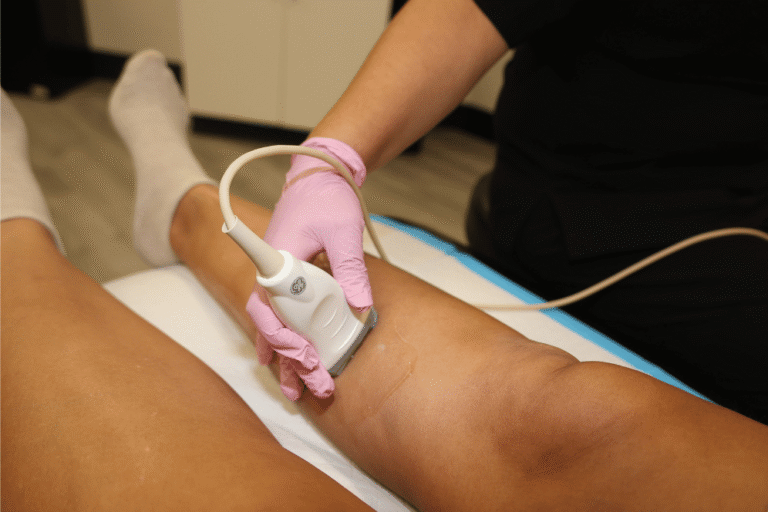
Medical Adhesive
Coverage differs by plan and may involve procedure-specific medical-necessity or authorization criteria.
Learn About VenaSealCosmetic vs Medical
Spider vein treatment performed only to improve appearance is generally considered cosmetic. If you also have leg pain, swelling, heaviness, skin changes or other symptoms, an evaluation can determine whether an underlying vein condition is present.
Important: Symptoms do not automatically make cosmetic spider vein treatment covered. Insurance decisions are based on the diagnosed condition, recommended treatment and your plan.
Schedule a Vein Evaluation
Government Plans
Medicare and AHCCCS plans can have different coverage and authorization requirements. Your exact benefits should be verified before treatment.
Medicare
Original Medicare & Medicare Advantage
Medicare may cover medically necessary varicose vein treatment when applicable coverage criteria are met. Elite Vein Clinic accepts Original Medicare and works with several Medicare Advantage plans.
Our team can check your Medicare or Medicare Advantage benefits before treatment.
Verify Medicare BenefitsArizona Medicaid
AHCCCS and plan-specific benefits
Elite Vein Clinic works with select Arizona Medicaid/AHCCCS plans. Coverage depends on the health plan listed on your card, network participation, and any referral or prior-authorization requirements.
AHCCCS coverage is tied to the specific health plan on your insurance card, so your plan should be verified before treatment.
Check My PlanPatient Financial Responsibility
Even when a treatment is covered, your plan may still leave part of the cost to you through deductibles, copays, coinsurance or network rules.
Four terms that can affect your out-of-pocket responsibility
Plan term
The amount you may need to pay for covered health services before your plan begins paying according to its terms.
Your remaining deductible can affect what you owe for a covered service.
Visit or service fee
A fixed amount that may apply to certain office visits, evaluations or covered services under your plan.
Copays can differ by visit type and benefit category.
Shared cost
The percentage of a covered service that may remain your responsibility after applicable deductible requirements are met.
Coinsurance is usually expressed as a percentage rather than a flat fee.
Benefit rules
Your costs can change based on network status, benefit exclusions, authorization requirements and the service being performed.
A benefits review can help clarify these factors before treatment.
If Coverage Is Not Approved
A denial does not always mean there are no next steps. Start by identifying why the request was not approved, then determine whether the issue can be addressed under your plan.
Elite Vein Clinic can help you review the information available from your plan and understand what may come next.
Review My Insurance1
Check whether the decision relates to a plan exclusion, network rule, missing information or medical-policy requirement.
2
Confirm whether a referral, authorization, clinical note, imaging result or other required item is incomplete.
3
Depending on the plan and denial reason, the next step may involve additional documentation, a different covered pathway or an appeal process.
Your Vein Care Team
Your insurance questions are only one part of the decision. The medical evaluation determines whether an underlying vein condition is present and which treatment may be appropriate.


Lead Practitioner
Board-Certified Emergency Medicine
Ultrasound-Guided Procedures

Vein Specialist
Dr. Olaide Abiodun is a physician specializing in phlebology and the diagnosis and treatment of venous disease. She cares for patients with varicose veins, chronic venous insufficiency, leg swelling, heaviness, aching, and other symptoms related to poor venous circulation.
She is board-certified in Internal Medicine and brings more than a decade of clinical experience treating complex medical conditions across hospitals in Ohio and Arizona. Her broad medical background provides a strong foundation for evaluating patients with underlying health conditions that may contribute to or complicate chronic vein disease.
At Elite Vein Clinic, Dr. Abiodun focuses on personalized, minimally invasive vein treatments designed to address the underlying source of venous symptoms while helping patients improve comfort, mobility, and overall quality of life.
Known for her compassionate approach, Dr. Abiodun combines advanced phlebology care with individualized treatment planning and patient education to help each patient feel informed and confident throughout their treatment.
Book Consultation
Lead Practitioner
Dr. Jaime French is a physician specializing in phlebology and the diagnosis and treatment of venous disease. She provides care for patients with varicose veins, chronic venous insufficiency, leg swelling, heaviness, aching, and other symptoms related to poor venous circulation.
Dr. French is board-certified in Emergency Medicine and earned her medical degree from Midwestern University’s Arizona College of Osteopathic Medicine before completing her residency at the University of Arizona in Tucson. She later practiced at HonorHealth Emergency Departments throughout the Valley, where she developed extensive experience with ultrasound-guided procedures, vascular evaluation, and complex medical conditions.
At Elite Vein Clinic, Dr. French focuses on minimally invasive, image-guided vein treatments designed to address the underlying cause of venous disease while allowing patients to return to normal activity with minimal downtime.
Known for her thoughtful and approachable style, Dr. French combines advanced phlebology care with individualized treatment planning and patient education to help improve leg comfort, mobility, appearance, and overall quality of life.
Book ConsultationAccepted Insurance
Dr. Olaide Abiodun and Dr. Jaime French work with the plans and networks below.
Medicare & Public Programs
4 plans
Medicare
Medicaid / AHCCCS
CHAMPVA
American Indian Health
Aetna & Meritain Plans
4 plans
Aetna
Aetna Innovation Health
Aetna EPO
Meritain Health / Aetna Choice POS II
UnitedHealthcare & UMR Plans
10 plans
UnitedHealthcare (UHC)
UHC Dual Complete
UHC Surest
UHC Golden Rule
UHC Navigate Plan
UHC Nexus Plan
UMR (UHC Choice Plus) / GEHA
UMR (Dignity Health Employee Plan)
UMR (HonorHealth)
UHC Community Plan (Arizona Physicians IPA)
Cigna Plans
2 plans
Cigna
Cigna Local Plus / Curative
Mercy Care Plans
4 plans
Mercy Care
Mercy Care / AHCCCS
Mercy Care RBHA
Mercy Care Advantage
Employer & Regional Networks
6 plans
Arizona Care Network (ACN)
Employers Health Network (EHN)
Intel Connected Care
Medica
Southwest Service Administrators
Sana Benefits
Other Participating Plans
4 plans
Humana
Oscar
Devoted Health
Gold Kidney Health Plan
Patient Experiences
Read verified patient experiences from people who visited Elite Vein Clinic for evaluation and vein care.








Common Insurance Questions
Find concise answers to common questions about coverage, approvals and insurance requirements before vein treatment.
Does insurance cover varicose vein treatment?
Coverage may be available when symptoms, examination findings, ultrasound results, and plan-specific medical necessity requirements support treatment. Medicare coverage for varicose vein treatment also depends on applicable eligibility and documentation requirements. Care performed only for appearance may be considered cosmetic.
How do I get insurance to cover varicose vein treatment?
Start with benefits verification and an appropriate vein evaluation. Your plan may also require medical records, diagnostic testing, a referral, conservative care or prior authorization.
What makes varicose vein treatment medically necessary?
Medical necessity generally means treatment is recommended for a diagnosed medical problem rather than appearance alone. Symptoms, complications, examination findings and imaging may all contribute.
Do I need an ultrasound before insurance will cover vein treatment?
Some plans require duplex ultrasound to document venous reflux or another abnormality before certain procedures. Whether imaging is needed depends on your condition, treatment and policy.
Do I need to wear compression stockings before treatment is approved?
Some policies require a period of conservative care before certain procedures, while others use different criteria. Your exact requirement should be checked with your plan.
What does prior authorization mean for vein treatment?
Prior authorization means the insurer requires review and approval before a covered procedure is performed. It does not guarantee that every part of the service will be paid in full.
Does insurance cover spider vein treatment?
Treatment performed only for cosmetic spider veins is generally not covered. If you also have symptoms, an evaluation can determine whether a separate underlying venous condition is present.
Does Medicare cover varicose vein treatment?
Coverage may be available when vein treatment is medically necessary, but the criteria and process can differ between Original Medicare and Medicare Advantage. Verify the applicable benefits before treatment is scheduled.
Does Medicaid cover varicose vein treatment in Arizona?
Your AHCCCS or Medicaid benefits are determined by the specific plan on your card, network participation and any coverage or authorization rules for the recommended treatment.
Can I still have out-of-pocket costs if treatment is covered?
Yes. Deductibles, copays, coinsurance, network rules and other plan terms can still affect your responsibility even when the treatment itself is covered.
What happens if my insurance does not approve treatment?
First identify the denial reason. Depending on the plan, the next step may involve completing a missing requirement, providing additional information, reviewing another covered option or following an appeal process.
Does Elite Vein Clinic accept Medicare Advantage plans?
Elite Vein Clinic works with several Medicare Advantage plans. Because network participation and authorization requirements can differ by plan, our team can verify your specific coverage before treatment.
Does Elite Vein Clinic accept AHCCCS?
Elite Vein Clinic works with select AHCCCS plans. The exact health plan on your insurance card matters, so our team will confirm network participation, referral requirements and any prior authorization before treatment.
Why should I verify my exact insurance plan?
Insurance companies can offer multiple plan networks with different benefits and authorization rules. Verifying the exact plan on your card helps confirm provider participation and what may apply before care begins.
English English  Spanish


